
What a Technician Hears on a Typical Call
A common service call this time of year starts the same way: a homeowner in an older Colonial or ranch with the original door says it was fine all summer, and now that the mornings are cold, it's grinding, squealing, or banging on the way up. The door usually still works, which is exactly why people wait a few weeks before calling — but noise is almost always the door telling you something is wearing out, drying up, or loosening, and freeze-thaw cycles tend to turn a minor issue into a bigger one fast.
Grinding
Grinding sounds like metal scraping metal, often loudest at one specific point in the door's travel, and sometimes paired with jerky movement.
- Track alignment: A technician checks the tracks first. If a bracket has shifted or the track is bent, the rollers ride against the edge of the channel instead of rolling smoothly inside it. The fix is realigning the track with a level and retightening the mounting bolts.
- Worn or rusted rollers: Steel rollers exposed to road salt and winter moisture corrode and start grinding in their housings. Nylon rollers are the usual replacement — they run quieter and hold up better through a Merrimack Valley winter.
- Dry or corroded hinges: If the grinding happens right at a panel joint, it's often metal-on-metal contact at a hinge. Lubrication solves it if the hinge still moves freely; a rusted-through hinge needs replacing.
Squealing
A high-pitched squeal on every open and close cycle, often worse on the first cold morning after a temperature drop, points to friction somewhere in the system.
- Lack of lubrication: This is the most common cause, especially once grease on rollers, hinges, and springs stiffens up in cold weather. The fix is a silicone- or lithium-based garage door lubricant applied to every moving part — not household oil or WD-40, which attracts grit and makes it worse.
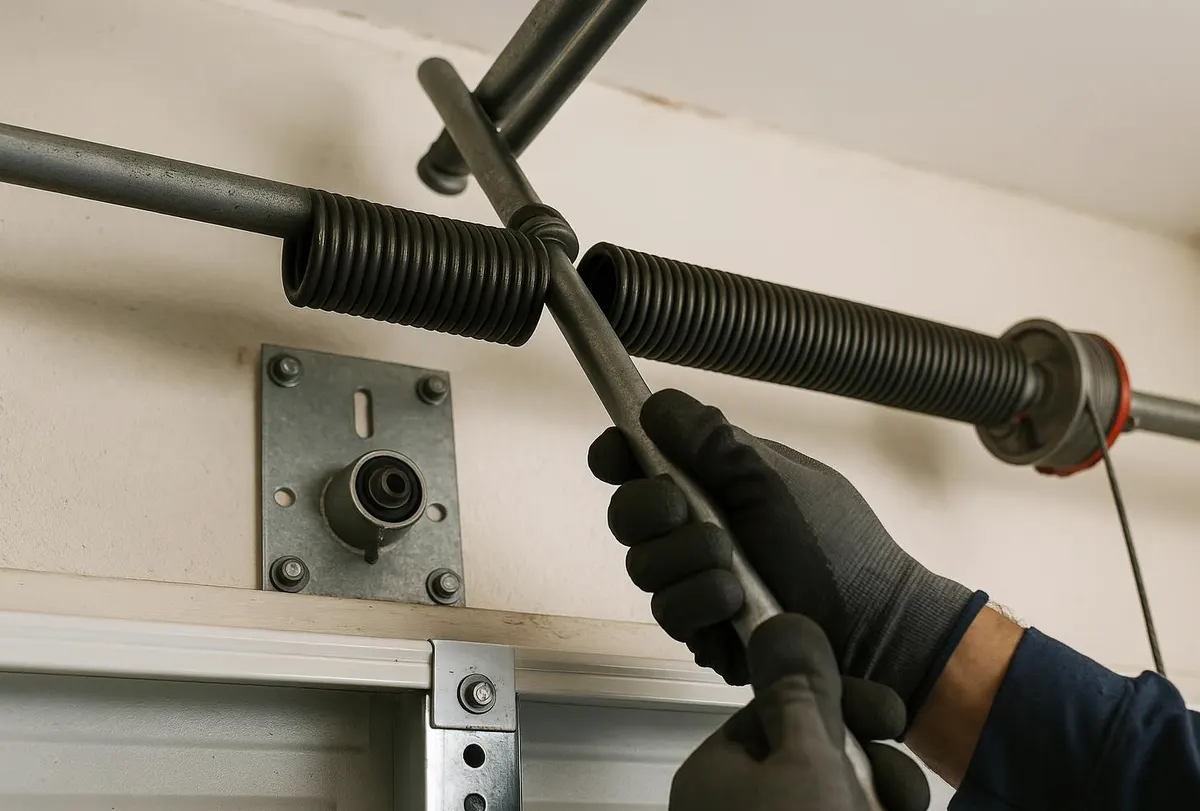
- Spring wear: If lubrication doesn't quiet things down, a technician checks the torsion springs for coils rubbing against each other or the shaft. Original springs on an older home may simply be nearing the end of their cycle life, which means spring replacement rather than another round of oil.
- Opener drive mechanism: A chain-drive opener that's lost tension, or a belt-drive that's dry, can squeal independently of the door itself. This gets adjusted or lubricated at the opener unit.
Popping
A sudden bang or pop — sometimes even when the door isn't moving — tends to alarm homeowners more than any other noise, and during a sharp cold snap or nor'easter it's often harmless.
- Thermal contraction: Metal track and hardware contract as temperatures drop overnight, and that shift can produce a pop with no safety issue at all. A technician still checks that fasteners are snug so normal contraction doesn't work bolts loose over time.
- Loose hardware: Years of vibration loosen bolts, brackets, and hinge plates, and a door can pop as a loose component shifts slightly under load. The fix is going through every connection point with a wrench.
- A failing spring or cable: This is the one that matters most. A spring beginning to fail, or a cable fraying under uneven tension, can pop before it actually breaks. This gets treated as urgent, since a torsion spring under full tension is dangerous to handle without the right tools.
Rattling
A steady rattle or vibration while the door runs, sometimes more noticeable on humid or windy days, usually means something is loose rather than worn.
- Loose nuts, bolts, and hinges: Decades of cycling loosen hardware, which is common on original doors in older housing stock. A technician tightens every bolt, hinge, and bracket along the track.
- Weatherstripping or panel seams: Humid summers swell wood and composite doors slightly, then winter cold shrinks them back, opening small gaps that rattle. Replacing worn weatherstripping and reseating panels usually resolves it.
- Opener mounting: A loose opener bracket or a trolley rattling against the rail can sound like it's coming from the door itself. Tightening the mounting hardware fixes this quickly.
When to Call Haverhill Garage Door
If the noise is a simple squeal that responds to lubrication, that's a maintenance item. But grinding that's gotten worse, any popping tied to the springs or cables, or a door that suddenly feels heavier or off-balance is worth a same-week call rather than a wait-and-see approach — especially heading into a season of ice and freeze-thaw cycles. Our technicians handle everything from routine Preventive Maintenance visits that catch dry rollers and loose hardware before they become a bigger repair, to full Spring Replacement when a torsion spring is showing signs of fatigue. If a door won't move at all or a spring lets go, our Emergency Garage Door Service covers that too.
If your garage door in Haverhill, Methuen, Lawrence, or anywhere else in the Merrimack Valley has started making noise it didn't make last month, call Haverhill Garage Door and we'll get a technician out to track down the cause before winter makes it worse.