
The Morning You Notice It
It's the first really cold morning of the season. You hit the opener button on your way to work, and the door groans, hesitates, then drops with a thud instead of closing smoothly. Or maybe you notice a thin line of daylight along the bottom edge where there didn't used to be one. Nothing dramatic has happened — the door hasn't broken. It's just reminding you that it was built for three seasons, and the fourth one, the one with ice dams and nor'easters and salt-crusted driveways, is a different kind of stress test.
Garage doors in this part of Massachusetts work harder than most. Freeze-thaw cycles swell and shrink wood and metal, road salt tracked in on tires eats at hardware, and a lot of the housing stock here still has original doors and openers from decades ago that were never built with today's insulation standards in mind. A little attention now, before the real cold sets in, saves you from a dead opener or a cracked panel in January.
Start With the Weatherstripping
The rubber seal along the bottom of the door and the vinyl strips along the sides are your first line of defense against drafts, meltwater, and drifting snow. Cold makes rubber brittle, so a seal that looked fine in September can crack or pull away from the track by November.
- Run your hand along the bottom seal — if it's stiff, cracked, or flattened on one side, it needs replacing before the first real snowfall.
- Check the side and top seals for gaps you can see daylight through.
- If your garage floor slopes or has settled unevenly, the bottom seal may not be sitting flat even when it's in good shape — that's worth noting for your technician.
On older, original doors, replacing weatherstripping is usually a simple fix, not a sign you need a new door.
Lubricate for Cold, Not Just for Quiet
Summer lubricant can thicken or go gummy once temperatures drop into the 20s and teens. If you lubricated your hinges, rollers, and tracks back in spring and haven't touched them since, that's probably not enough for winter.
- Use a silicone-based or lithium-based garage door lubricant rated for cold weather — avoid regular household oil or WD-40 as a long-term fix, since it attracts grit and breaks down faster.
- Lubricate hinges, rollers, and the springs themselves (lightly), not just the track.
- Wipe the tracks clean of old grease and dust first; buildup mixed with cold air is what causes that sluggish, jerky motion you feel on frosty mornings.
Check the Balance Before the Snow Load Hits
A door that's slightly out of balance is annoying in October. In January, with a wet, heavy snow load on the roof and extra strain on the opener from stiff, cold components, it can push a worn spring past its limit.
- Disconnect the opener by pulling the emergency release cord.
- Lift the door halfway by hand.
- If it stays in place on its own, it's balanced. If it drifts down or shoots up, the spring tension is off.
This isn't a DIY spring adjustment job — torsion springs are under serious tension and are genuinely dangerous to work on without the right tools. But knowing the symptom helps you describe the problem accurately when you call for service.
Inspect the Hardware Freeze-Thaw Loosens
Every freeze-thaw cycle this region gets — and there are a lot of them between November and March — causes tiny amounts of expansion and contraction in the wood framing around your door and in the metal track mounts. Over a few seasons, that works bolts and screws loose.
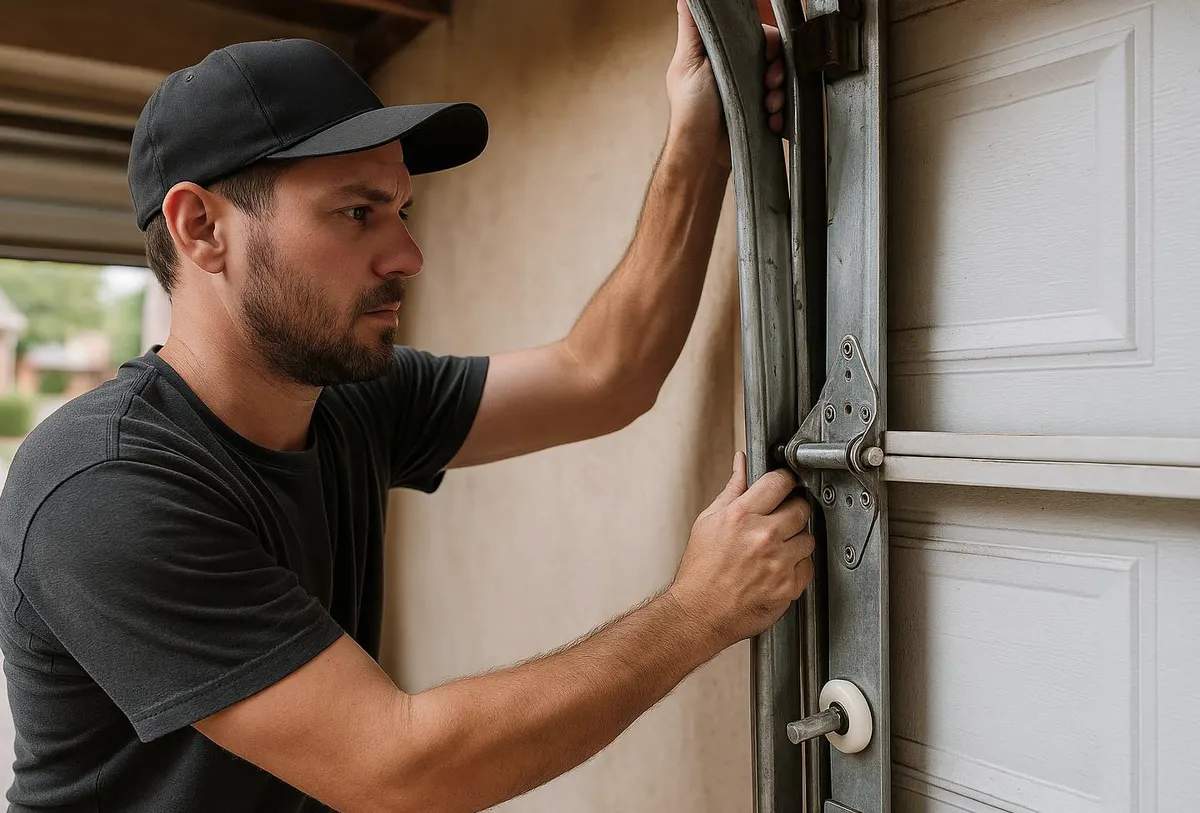
- Check that track brackets are still snug against the framing.
- Look at hinges for play or wobble, especially on doors more than ten years old.
- Tighten visible bolts with a wrench, but don't over-torque older, slightly rusted hardware — it can strip or snap.
Protect the Opener From Power Blips
Nor'easters bring wind-driven power outages, sometimes brief, sometimes not. If your opener doesn't have a battery backup, a storm that knocks out power can leave your garage door stuck shut (or open) until service is restored. Battery backup units are a relatively inexpensive add-on and worth considering if you don't already have one, especially if your garage is your main entry point in bad weather.
Deal With Salt and Slush Before It Does Damage
Road salt tracked in from your car doesn't just sit on the floor — it splashes onto the bottom panel and track hardware and accelerates rust over a winter. A quick rinse of the lower door panel and track area every few weeks, even just with a hose on a mild day, cuts down on corrosion a lot more than people expect.
When to Call Haverhill Garage Door
If your door is dragging, unbalanced, or the weatherstripping is too far gone to patch, that's the point to call in a technician rather than keep adjusting things yourself. Haverhill Garage Door's Preventive Maintenance service covers exactly this kind of pre-winter tune-up — checking spring tension, hardware, seals, and opener performance in one visit, so you're not troubleshooting mid-storm. If a spring has already failed or is clearly overdue, their Spring Replacement service handles that safely with the right tools and torsion equipment, rather than leaving it as a DIY project.
If you're in Haverhill, Methuen, Lawrence, Amesbury, Merrimac, Groveland, Bradford, or Plaistow and your garage door feels like it's dreading winter as much as you are, call Haverhill Garage Door for a pre-winter checkup before the next nor'easter rolls through.